
Free and Paid OnlyFans Access: Structural Differences
OnlyFans access splits into two structures: a free page priced at $0 and a paid page whose base subscription begins at $4.99. This article maps how each model handles entry pricing, revenue timing, platform fees, content edges, and renewal rather than judging which one is better. BestOnlyFans treats the divide as a design question, so the sections below compare mechanics. Rankings are refreshed monthly, but the structure itself changes slowly.
A free page asks for nothing at the door, which reads simpler than it behaves. Without a base fee there is no recurring anchor, so every dollar arrives through a deliberate act, whether an unlock, a tip, or a paid message. Two profiles posting similar content can therefore diverge at checkout, at renewal, and the moment a direct message lands. BestOnlyFans refreshes its rankings every month.
How Each Model Sets Its Entry Price
Does a dollar figure at the door really explain the gap between these two pages? A free page opens at $0 and collects only when someone chooses to unlock something. A paid page charges a base fee first, which builds a recurring relationship before any post gets opened, and that timing change reshapes how a subscriber thinks about every later unlock, tip, or message because the money has already moved once before the feed even loads.
Paid base prices sit inside a defined corridor running from $4.99 to $49.99. No paid page may advertise a base subscription under $4.99. Promotional first months are the one exception, because an opening discount such as $3 replaces the first payment rather than the standing base price.
Figures verified 2026-08-10 against the OnlyFans published terms:
| Checked Value | Derived Exact Amount |
|---|---|
| Platform fee 20.0% | $4.99 subscription pays the creator $3.99 |
| Platform fee 20.0% | $49.99 subscription pays the creator $39.99 |
| Card verification hold | $0.10 |
| Pay-per-view unlock cap | $50.00 |
| Tip limit | $100.00 |
| Free page price | $0.00 |
| Paid chat band | $3.00-$5.00 per message |
- Free pages set entry at $0 and monetize through optional unlocks.
- Promotional first months may dip below $4.99 as a temporary discount.
- Standard paid base prices begin at $4.99 and never drop beneath it.
This matters when two profiles look interchangeable on a landing screen. A $3 promotion and a $0 free page share a low first cost, then split ways: one rolls into a recurring base fee, the other never does.
Watch the promotional window closely. A discounted first month converts into the standard base price on renewal, so the second payment often arrives noticeably higher than the first.
Revenue Paths: Subscription Versus Unlocks
Money moves in two directions. The paid structure takes a base fee, then stacks optional extras on top of it, while the free structure takes nothing upfront and leans on pay-per-view unlocks, tips, and paid chat instead, so timing rather than ceiling becomes the real dividing line between the two approaches.
- The paid model charges the base subscription first, then adds unlocks, tips, and chat.
- The free model charges nothing at signup and earns through unlocks, tips, and chat alone.
Once inside, both models draw on the same add-on tools. A pay-per-view message can carry an unlock price up to $50, paid chat commonly runs $3 to $5 per message, and tips can reach $100. None of those mechanics shift with the entry model; only the presence of a recurring base fee separates the two.
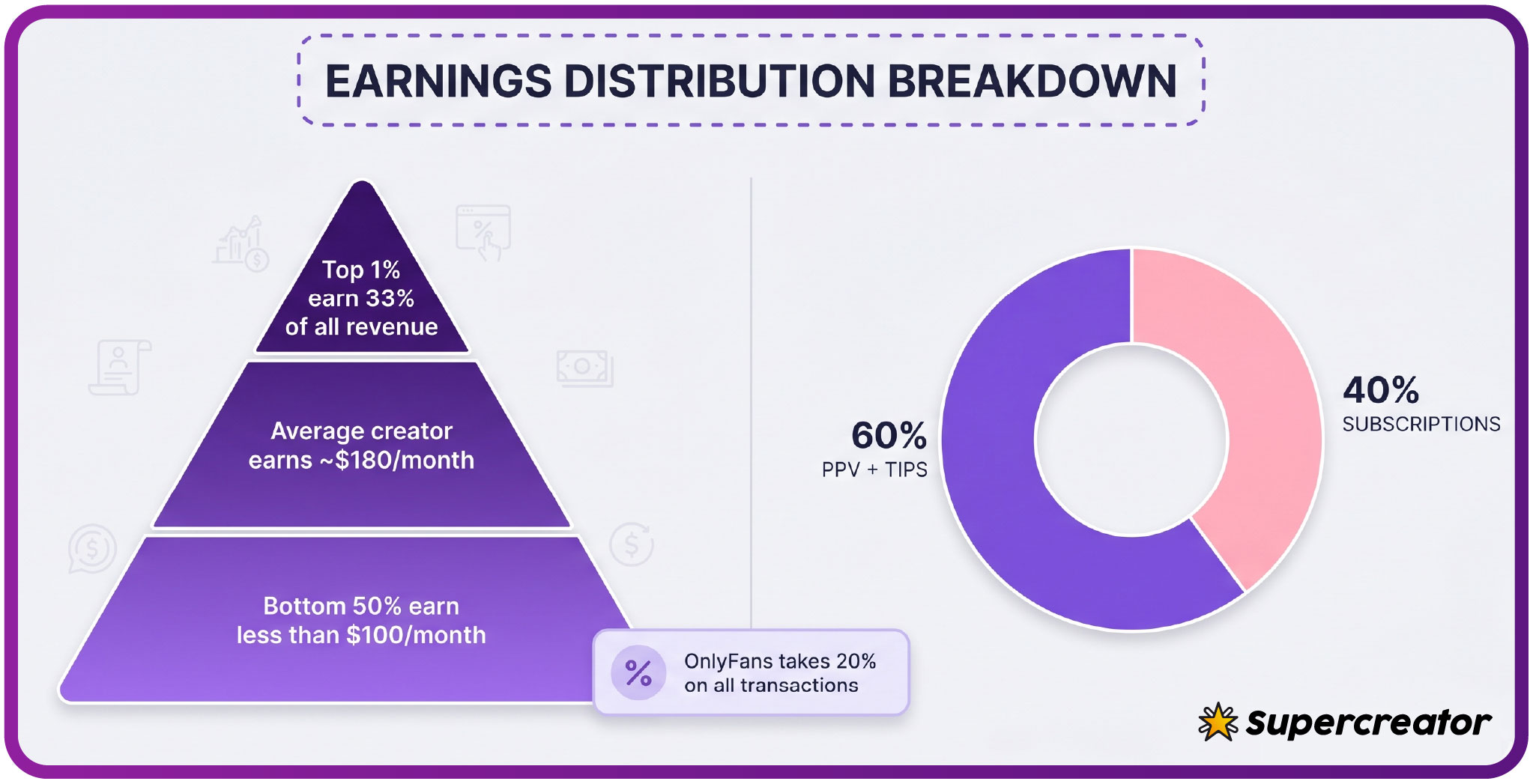
With no recurring floor, free-page income swings with subscriber mood and activity. A paid page carries a steadier baseline drawn from renewals, which smooths the monthly picture. Neither structure promises an outcome, and takings still follow how many subscribers open or tip.
Where the 20% Platform Fee Applies
Twenty percent comes off the top. Base subscriptions, pay-per-view unlocks, tips, and paid chat all pass through that single rate without exception, so a free page and a paid page face the identical deduction on every dollar that moves regardless of which entry model brought the subscriber in.
Because the rate stays flat, picking a structure never changes the fee arithmetic. It changes when money lands and how many separate transactions create it. One model produces a recurring charge plus optional extras; the other produces only the extras.
Content Boundaries Under Each Structure
What sits behind the gate differs by model. A free feed usually acts as a preview layer, with posts that set tone and hint at what sits behind a locked message, while paid tiers tend to hold a fuller library since the base fee already pays for access, leaving the boundary to rest wherever a subscriber judges the preview sufficient.
- Feed posts on a free page often tease media sitting behind pay-per-view gates.
- Pay-per-view messages gate specific media behind a one-time unlock price.
- Paid tiers frequently fold archive access into the base subscription.
- Direct message responsiveness can differ between free and paid pages.
These boundaries are conventions, not hard rules. Plenty of paid pages still gate their heaviest media behind pay-per-view, and some free pages publish generously to grow an audience. Structure supplies the default; the creator adjusts from there.
How Auto-Renew Behaves Differently
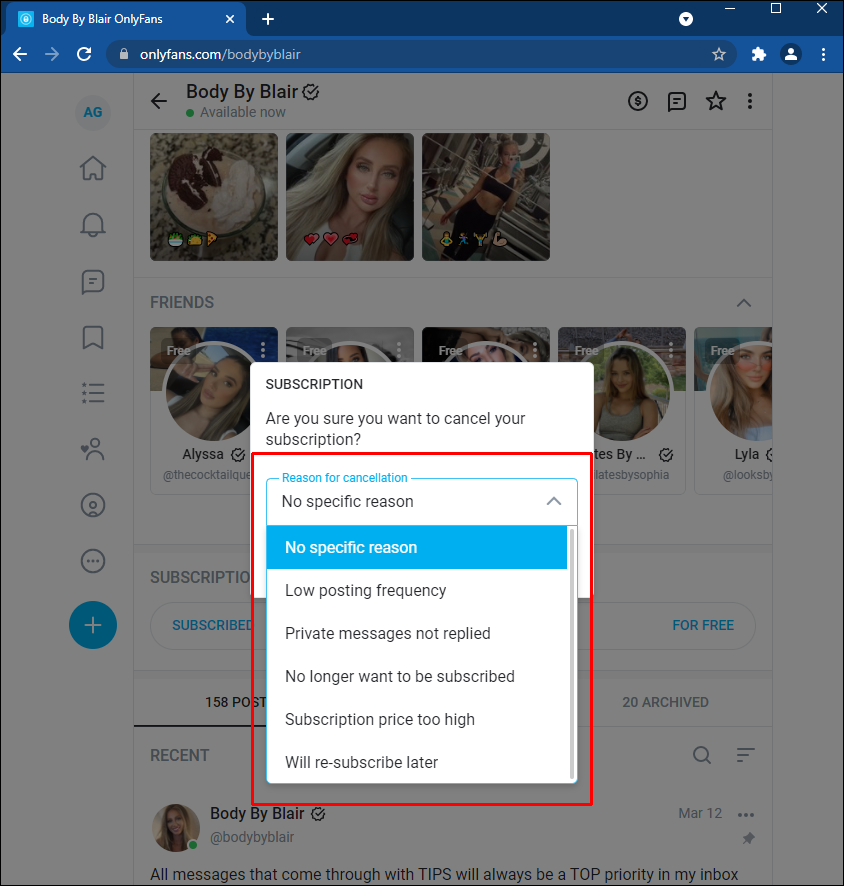
Renewal is the quiet mechanic. Paid subscriptions renew automatically at each billing period until cancelled, while free pages never renew because there is no charge to repeat, and that single difference divides the two models more cleanly than any price comparison because it surfaces on every statement without the subscriber ever acting.
- Paid subscriptions renew automatically unless cancelled before the period ends.
- A creator price increase halts auto-renew instead of quietly charging the new rate.
- Existing access persists until the current paid period expires.
The price-increase rule deserves attention, because it shields subscribers from an unexpected jump. When a creator lifts the base price, renewal simply does not proceed, and access continues until the period already paid for runs out. No partial refund, no surprise charge, no negotiation.
Comparing Typical Paid Price Bands
Most paid pages sit well below the ceiling. The typical corridor runs $4.99 to $15, with the bulk landing between $5 and $10, while upper bands exist but cover a smaller slice of profiles and usually match larger libraries or niche content.
| Band | Price Range | Typical Subscriber Profile |
|---|---|---|
| Entry | $4.99-$6.99 | Price-sensitive subscriber testing one or two pages |
| Typical | $7.00-$15.00 | Regular subscriber with a small rotating list |
| Upper | $15.01-$49.99 | Committed subscriber seeking a large library |
Free pages fall outside that table entirely, since $0 is not a band within the paid range. A free page competes on unlocks instead, so its effective cost rides on how much a subscriber chooses to open rather than a fixed monthly figure.
Practical comparison starts with a rough unlock estimate. Someone who opens one or two posts monthly may find a free page efficient; someone who reads everything usually benefits from one flat base fee. Habitual spending on a free page can quietly outrun a modest subscription, while occasional unlocking keeps a paid tier unnecessary. This is where the methodology behind BestOnlyFans price-tier sorting becomes useful, because it groups pages by band rather than by popularity alone.
Choosing Based on Usage Rather Than Price
Usage beats headline price. The structural choice reduces to how much content a subscriber actually consumes, because the two models price different behaviors and the cheaper-looking option often costs more once a month of real activity is tallied up.
- Estimate how much content you will realistically view in a month.
- Check whether the free page’s teasers cover that appetite on their own.
- Compare the running unlock total against a paid tier’s base price.
- Pick the lower of the two, then revisit after one billing cycle.
Card verification applies to both models, which surprises some readers. A $0.10 hold is placed during verification and refunded within days. That charge is not a subscription fee and lands whether the page is free or paid. Anyone weighing free onlyfans cute profiles against paid options should treat the verification step as a wash rather than a differentiator.
Budgeting helps here too, because free pages make spending invisible until unlocks stack up. A monthly cap set before subscribing keeps a free page genuinely free and a paid page inside a planned figure. A short review at the end of each cycle reveals which structure actually matched your habits.
Where External Rankings Fit the Picture
No built-in directory exists. OnlyFans lacks a discovery feed or central list, which is exactly why ranking and comparison sites exist, sorting pages by category and price tier in a way the platform itself never presents to a browsing subscriber.
Ranking sites earn their keep at the comparison step, where a subscriber wants price tiers side by side. They cannot verify content, and they do not replace your own judgment about what a page offers. Treated as a starting index, they shorten the search without making the decision for you.
Safety applies equally to both models. Phishing attempts often imitate login screens or payment pages, and two-factor authentication inside account settings blocks most unauthorized access. Anyone reviewing phishing tactics will recognize the pattern fast: an urgent message, a lookalike domain, and a request to re-enter payment details.

FAQ
Is a free page always cheaper than a paid subscription?
No. A free page charges nothing at signup, but pay-per-view unlocks can stack past a paid page’s base fee inside a single month. The real comparison turns on how many unlocks a subscriber actually opens, not on the entry price alone.
Do paid subscriptions renew automatically?
Yes. Paid subscriptions renew at the end of each billing period until cancelled. Free pages never renew because no charge exists to repeat, which makes renewal behavior the sharpest structural difference between the two models.
What happens if a creator raises the price mid-subscription?
Auto-renew stops instead of charging the higher rate. The subscriber keeps access until the period already paid for expires, and no further charge applies unless the subscription is restarted manually at the new price.
Can a free page and a paid page from the same creator coexist?
Yes. A creator can run both models at once, using the free page as a preview layer and the paid page for the fuller library. That setup lets subscribers pick their entry point while the creator collects unlocks and base fees through separate paths.